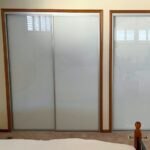
You know the routine. The wardrobe door needs a little lift and a firm shove before it will move. Or it grinds halfway along and then jumps. Or it has quietly slipped off its runner and now leans against the wall, waiting for someone to deal with it. It’s an easy job to put off, right up until the morning you can’t get to your work shirts.
The good news is that sliding wardrobe doors fail for mechanical reasons, and you can usually work out which one in a few minutes. Here’s how to tell whether you’re looking at a five-minute fix, a job for a professional, or a sign your doors are simply past it.
Why sliding wardrobe doors go off track
Worn or seized rollers are the most common cause by far. Every sliding door rides on small wheels, and after years of daily use those wheels flatten, the bearings seize or the housings crack. A door on tired rollers drags, rides low and eventually drops out of the track altogether.
A dirty or damaged bottom track is next. Tracks collect a surprising amount of grit, lint, hair and the odd earring. A vacuum cleaner head or a dropped shoe can also dent a thin aluminium runner. Either way, the roller hits the obstruction and climbs out.
A loose or misaligned top guide lets the top of the door wobble. Once the top can move freely, the bottom can walk right off its track.
House movement is a very Canberra problem. Much of the city sits on reactive clay that swells when wet and shrinks as it dries, and that movement can shift a home’s footings enough to make doors and windows jam. Our big swings between frosty winters and hot summers add to it. An opening that was square when the robe went in may not be square now. The door hasn’t changed, but the hole it sits in has.
Warped or sagging panels are common in hollow, vinyl-wrapped builder doors. Once a panel bows, no amount of roller adjustment will make it run true.
Overloaded doors are the last cause. When heavy mirror panels are fitted to frames and rollers that were never rated for their weight, the hardware wears out quickly.
What you can safely fix yourself
First, a safety note. If your doors are mirrored, don’t attempt any of the lifting or removal steps below on your own. A full-height mirror door is heavy and awkward, and it’s glass. Get a second pair of hands, or leave it to a professional.
With that said, a vacuum cleaner and a screwdriver will sort out a lot of sticking doors.
Start with the bottom track. Vacuum it thoroughly with a crevice tool, then wipe it down with a damp cloth. Grit is the number one reason doors grind, jump or ride out of the track, and it’s also the easiest fix. Slide the door back and forth to see whether it has improved before you do anything else.
Next, check the top guide. Open the door and look up at the head track. The guide should sit straight and its screws should be firm. Tighten anything that has worked loose.
If the door still sits crooked or catches, look for roller adjustment screws. They’re usually at the bottom corners of the door frame, sometimes behind a small cap. Turning them raises or lowers that side of the door so you can level it against the wall or frame. Work a quarter turn at a time and check the gap along the edge after each adjustment.
To take out a non-mirrored door and inspect the rollers, most systems use a lift-and-tilt method. Lift the door up into the top track as far as it will go, swing the bottom edge towards you, then lower it clear. Reverse the steps to refit it, and make sure the rollers are seated in their channel before you let go.
There are also a few things to avoid. Don’t oil or grease the track. It seems like it should help, but it traps grit and makes things worse within weeks. Don’t try to hammer a bent track flat, because that usually spreads the damage. And don’t force a door that won’t move. Something is catching, and forcing it is how rollers snap and panels crack.
When it's a repair job for a professional
Some problems are beyond the average toolkit. Rollers on older systems are often discontinued, and a specialist will know what fits and what’s still available. A worn-through or badly dented bottom track needs replacing, not patching. If the opening has moved out of plumb, getting the doors to hang square in it takes experience. Any work that involves removing or re-hanging mirrored doors is best left to someone who handles glass every day.
When replacing is the cheaper call
Repairs make sense when the doors themselves are sound. There’s a point, though, where money spent on old doors is money you won’t get back. Replacement usually wins if the panels are warped, the track system is discontinued, the finish is dated, or you know you’ll be replacing the doors within a couple of years anyway.
There’s a bigger reason too. If your wardrobe keeps throwing doors because the opening has moved, repairs only treat the symptom. A new made-to-measure set is built to fit the opening as it is today, on a new track installed level and square. That fixes the geometry for good instead of fighting it every few months. If you’ve been thinking about replacing tired wardrobe doors for a while, a door that keeps coming off its runner may be the push you needed.
What replacement actually involves
It’s less disruptive than most people expect. It starts with a free measure and quote at your home, where we check the opening, talk through your options and give you a clear price. Your doors are then custom made in our Fyshwick workshop to your exact measurements and installed by our own team, usually in a single visit with minimal mess.
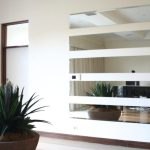
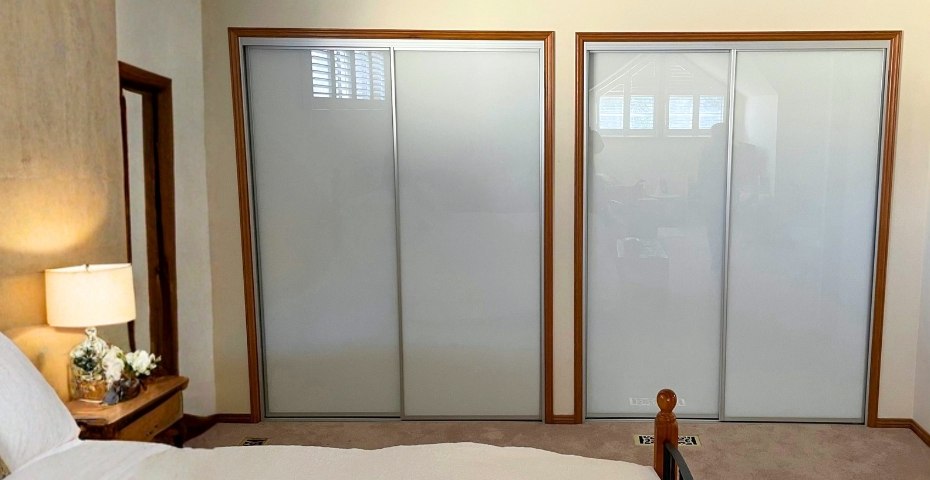
Our made-to-measure wardrobe doors glide on concealed rollers that are near-silent and easy to adjust. A flat bottom sill profile keeps the frame low and unobtrusive. You can choose from melamine, coloured glass or floor-to-ceiling mirrored doors, which make a bedroom feel noticeably bigger and brighter.
Get it sorted before the end-of-year rush
Plenty of Canberra homes built between the 1970s and 1990s still have their original robe doors, and many of those doors are well overdue. If yours is one of them, it pays to get in early, because installation slots fill quickly as the end of the year approaches.
Monaro Screens has been making and installing wardrobe doors for Canberra homes for more than 30 years. Whether your doors need adjusting or replacing, we’ll give you a straight answer.
Book your free measure and quote: call (02) 6239 2664, enquire online, or visit our Fyshwick showroom.